


Assessment of academic performance, preparedness, and career orientation among Doctor of Pharmacy students: a cross-sectional study from Sargodha, Pakistan
Published: 31 December 2024
Volume 3
Abstract
Pharmacy students face critical decisions about their career paths as they approach graduation. However, in Pakistan, data are limited on how academic performance, job preparedness, and career orientation are interrelated among pharmacy undergraduates. This study aimed to assess academic performance, job-seeking preparedness, and career orientation among fourth- and fifth-year Doctors of Pharmacy (Pharm.D.) students and to evaluate the availability and utilization of institutional career counseling services. A descriptive cross-sectional study involving 183 fourth- and fifth-year Pharm.D. was conducted at the College of Pharmacy, University of Sargodha. students. Data were collected via a self-structured, expert-validated questionnaire covering academic performance, job preparedness, and career orientation. The data were analyzed via SPSS and RStudio, which employ descriptive statistics, independent samples t tests, and Pearson correlation analysis. Most participants were female (65.57%), urban residents (72.68%), and unmarried (95.08%), with 69.95% having one to three siblings with a university education. A CGPA ≥ 3.5 was reported by 60.66% of the students, whereas only 20.77% had research experience. Workshop and conference participation was high (85.25% and 83.06%, respectively), but institutional support was limited—only 19.67% received help from the student affairs department, and 29.51% received guidance from a student society or organization. Although 89.62% could make a CV and 71.58% could independently apply for jobs, only 46.45% could write a cover letter, and 42.08% felt prepared for interviews. The awareness of private-sector pharmaceutical roles (15.85%) exceeded that of public-sector roles (13.11%), and the knowledge of community (70.49%) and clinical (64.48%) pharmacies was greater than that of industrial (8.20%) or hospital (38.25%) positions. Career orientation toward nonpharmaceutical sectors was relatively stronger in the public (49.73%) and private (45.90%) domains. Gender (p = 0.030) and year of study (p = 0.047) were significantly associated with preparedness, favoring male and 5th-year students. A moderate correlation existed between academic performance and preparedness (r = 0.38), whereas correlations between academic performance and career orientation (r = –0.02) and between preparedness and career orientation (r = 0.09) were weak or negligible. Pharmacy undergraduates in their fourth and fifth professional years were academically sound but demonstrated deficiencies in job-seeking readiness and awareness of nontraditional career paths. However, exposure of students to career counseling by institutions has remained limited; findings highlight the need for career guidance services in a structured manner, intense research engagement, and vast exposure of students as well as fresh graduates to diverse professional pathways beyond traditional pharmacy roles.
Keywords
Pharmacy profession, pharmaceutical career counseling, career orientation, career preparedness, undergraduate pharmacy students, fresh graduates, pharmacy education
1. Introduction
Pharmacy has more than 3.7 million professionals worldwide, and it is regarded as the third largest healthcare profession, highlighting its essential role in patient care and healthcare systems [1]. The traditional role of pharmacists has evolved from the manufacturing, compounding and dispensing of drugs to a broader range of responsibilities, including clinical services, research and management in the healthcare system. Pharmacists, as professionals of the contemporary world, are essential members of health teams and are recognized for their valuable technical inputs and contributions across various domains of the healthcare system [2]. The diverse nature of the pharmacy profession offers pharmacists a wide range of careers in the pharmaceutical sector, including but not limited to pharmaceutical manufacturing, quality control, sales, marketing, research and development, pharmacoeconomics, and pharmacovigilance, as well as associations with regulatory bodies such as the Drug Regulatory Authority of Pakistan (DRAP) in different professional roles. Furthermore, hospital pharmacists play clinical roles in patient care and are involved in areas such as aseptic dispensing, extemporaneous compounding, sterile preparations, topical preparations and pharmacovigilance [3,4].
In Pakistan, pharmacy education evolved with the introduction of the Pharmacy Act of 1967, which constituted the first formal three-year baccalaureate degree program, which was then extended to a four-year degree program from 1978-1979. The curriculum was further enhanced to include a five-year Doctor of Pharmacy (Pharm.D.) degree from 2003–2004, which included clinical pharmacy as its major course [5]. According to 2023 data from the Pharmacy Council of Pakistan (PCP), 14,405 Pharm.D. students were expected to graduate from 153 public and private institutions across the country [6]. Furthermore, the number of registered pharmacists in Pakistan, i.e., 33,455 recorded five years ago, has also been steadily increasing every year [7]. Given the growing number of professionals in the field, the future of pharmacy services and careers in Pakistan is poised for significant developments in the profession.
Career orientation and preparedness are fundamental in directing career-related decisions and fostering effective self-management behavior among graduates [8]. Career orientation is regarded as an individual’s preference for specific career opportunities and pathways in professional development [9]. Preparedness refers to the usual job readiness skills of an individual, such as writing resumes, interview preparation, and basic job application capabilities. In general, career orientation is referred to as the level of awareness and preferences of a graduate regarding specific sectors or professional roles within pharmaceutical sciences and related industries [10]. The choices made regarding academic disciplines and career paths are important in aligning personal interests and motivations with professional goals. Effectively managing career goals in early adulthood can lead to greater professional development and career satisfaction in the future [11]. Therefore, evaluating pharmacy students’ awareness of different sectors of the pharmaceutical sciences is vital for informed career planning and decision making.
Pharmacists are increasingly venturing into diverse career paths across the healthcare system, including professional roles such as disease counselors (e.g., diabetes educators), officers in healthcare supply chain management, health insurance companies, and clinical trial associates, as well as other important professional positions across both the public and private sectors. Furthermore, the scope of hospital pharmacy practice has expanded from traditional warehousing and inventory management to specialized areas in clinical pharmacy, e.g., infectious disease control and oncology pharmacotherapy, and pharmacists now also play critical roles in drug information centers within hospitals. International scientific literature regarding pharmacy students’ preferences for specific careers in Bachelor of Pharmacy and Pharm.D. programs and highlights various career paths, such as hospital pharmacy, community pharmacy, clinical pharmacy, industry, and academia, as the preferred choices among pharmacy students [4,12,13,14,15].
However, few studies have specifically evaluated the associations among academic performance, preparedness, and career orientation among pharmacy students and graduates, particularly in terms of job-seeking skills and sector-specific career awareness. This gap is particularly important in developing countries such as Pakistan, where students and graduates face limited institutional support and are limited to nonexposure to broader horizons of pharmacy careers and pathways [16,17]. Addressing these gaps is important for strengthening career guidance programs and supporting the professional development of students as well as fresh graduates across the country. Therefore, this study aimed to assess academic performance, job-seeking preparedness, and career orientation among fourth- and fifth-year professionals, Pharm.D. students and to evaluate the availability and employment of institutional career counseling services.
2. Methodology
2.1. Study design
The study utilized a cross-sectional design and was conducted for three months, from May 2023 to July 2023.
2.2. Study setting
The study was conducted at the College of Pharmacy, University of Sargodha, a major public sector university in Punjab, Pakistan, established in 2002. The University has approximately 19,000 students in 22 departments and four constituent colleges. The College of Pharmacy has more than 600 students enrolled in undergraduate (Pharm.D.) and postgraduate programs (M. Phil. and PhD). The college is unique in Pakistan because it has an industrial unit along with a model pharmacy that provides quality medicines and services to the local community at a cheap price compared with the market [18].
2.3. Ethical approval
Ethical approval for the study was obtained from the ethical review committee of the University of Sargodha (No. SU/REC/1491). Furthermore, permission was obtained from the university administration and the College of Pharmacy for data collection and for conducting the study.
2.4. Participant recruitment
The study included all regularly enrolled Pharm.D. students in their fourth and fifth professional years (8th–10th semesters) at the University of Sargodha who provided consent to participate. However, the study did not include transferred students from other institutions; foreign students enrolled in the Pharm.D. program, or students who had resumed their studies after taking a leave of absence.
2.5. Sample size and sampling technique
The sample size was calculated via the OpenEpi sample size calculator, which maintains a 95% confidence interval and a 5% margin of error [19]. A prevalence of 10.10% was used on the basis of a prior study conducted among pharmacy students in Lahore, which reported that 10.10% of participants were unaware of the scope of the pharmacy profession [20]. This yielded a minimum required sample of 140 students. To address nonresponders and incomplete questionnaires, the final sample size was increased to 200. The purposive sampling technique was used to target the 4th and 5th professional years students at the University of Sargodha.
2.6. Questionnaire development
The questionnaire was developed through a comprehensive literature review and included the questions most relevant to the objectives of the study and target population [21]. It consists of four major sections: demographics, academic performance, preparedness, and career orientation. The questionnaire was then reviewed by field experts to ensure content validity, and after their feedback was incorporated, the finalized tool was used for data collection.
2.7. Study measures
The sociodemographic section collected data on the age of the participants, sex, marital status, residential status, family income, education level of the siblings, year of study, and presence of a pharmacist in the family.
The academic performance section comprises eight binary (yes/no) items related to the academic profiles of students. These included CGPA, internship experience, research experience, conference participation, workshop participation, attendance at pharmacy career sessions, support from the student affairs department, and guidance from any student society or organization. Each response was marked as ‘0’ or ‘1’, resulting in a cumulative academic score ranging from 0-8; total scores were categorized as poor for scores less than 4, average for scores between 4-6, and good for scores greater than 6.
The preparedness section evaluated the readiness of students for job-seeking operations via ten close-ended questions, addressing their understanding of cover letters, their knowledge of the difference between a curriculum vitae (CV) and a resume, their competence in preparing a professional CV and writing a cover letter, their knowledge of areas to look for jobs, their perceived preparedness for interviews, their confidence in performing well in interviews, their ability to apply for jobs independently, their familiarity with career options for pharmacists, and their understanding of the difference between professional pharmacists and pharmacy technicians. Each item was marked as ‘0’ or ‘1’, with a maximum possible score of 10. Scores were categorized as poor if they were less than 5, average if they were between 5 and 7, and good if they were greater than 7.
The career orientation section measured the level of awareness of students for sector-specific roles within the healthcare profession and related fields across the public and private sectors with the help of eight open-ended questions (S1 to S8). Each response was evaluated and categorized as "yes" for clearly valid and specific answers; "Maybe" for general, vague, or partially correct answers; and "No" for incorrect, irrelevant, or missing responses. For scoring purposes, “Yes” responses were assigned a value of 1, “Maybe” a value of 0.5, and “No” a value of 0. The cumulative score for this section ranged from 0-8 and was categorized as poor for scores less than 4, average for scores between 4 and 6, and good for scores greater than 6.
2.8. Data collection
Data were collected via a self-administered questionnaire distributed to suitable participants for the study during their scheduled academic sessions. Prior to participation, all the respondents were informed about the objectives and scope of the study. Participation in the study was voluntary, and informed written consent was obtained from each respondent. The questionnaire was completed anonymously to maintain confidentiality and reduce response bias.
2.9. Data analysis
Descriptive statistics were used for sociodemographic variables, academic performance, preparedness, and career orientation. Bivariate analyses were performed to explore associations between sociodemographic predictors (such as gender, residential status, family income, academic year, and the presence of a pharmacist in the family) and outcome variables (academic performance, preparedness, and career orientation). Independent samples t tests were used to compare binary categorical predictors, whereas Pearson’s correlation coefficients (r) were computed for ordinal or continuous variables (e.g., family income, siblings’ university education). The assumption of normality was verified via Q–Q plots prior to applying parametric tests. Statistical significance was set at p < 0.05. Additionally, interrelationships among the three outcome domains were visualized via a Pearson correlation matrix heatmap.
3. Results
3.1. Sociodemographic profile
Table 1 shows the sociodemographic profile of 183 Pharm.D. students out of the 200 questionnaires distributed, yielding a response rate of 91.50%. Most of the students were aged 23 years (35.52%), followed by 22 years (24.59%) and 24 years (23.50%). A total of 65.57% of the sample included female students, whereas 34.43% were male. Most participants resided in urban areas (72.68%), whereas 27.32% reported living in rural areas.
| Variables | Frequency (%) | |
| Age (years) | 21 | 15 (8.20) |
| 22 | 45 (24.59) | |
| 23 | 65 (35.52) | |
| 24 | 43 (23.50) | |
| 25 | 14 (7.65) | |
| 26 | 1 (0.55) | |
| Gender | Male | 63 (34.43) |
| Female | 120 (65.57) | |
| Residential status | Urban | 133 (72.68) |
| Rural | 50 (27.32) | |
| Family income (monthly) in PKR | < 50,000 | 65 (35.52) |
| 50,000 – 100,000 | 79 (43.17) | |
| > 100,000 | 39 (21.31) | |
| Marital status | Married | 9 (4.92) |
| Unmarried | 174 (95.08) | |
| Number of siblings with university education | 0 | 33 (18.03) |
| 1-3 | 128 (69.95) | |
| 4-6 | 18 (9.84) | |
| > 6 | 4 (2.19) | |
| Year of study | Fourth | 99 (54.10) |
| Fifth | 84 (45.90) | |
| Presence of a pharmacist in the family | No | 157 (85.79) |
| Yes | 26 (14.21) | |
Table 1 further shows that monthly family income was mostly between PKR 50,000 and 100,000 (43.17%), followed by less than PKR 50,000 (35.52%) and more than PKR 100,000 (21.31%). Most students were unmarried (95.08%). With respect to siblings’ educational attainment, 69.95% had 1–3 siblings with a university education, 18.03% had none, 9.84% had 4–6 siblings, and 2.19% had more than six. More than half of the students were in their fourth year (54.10%), and 45.90% were in their fifth year. A total of 14.21% reported having a pharmacist in the family.
3.2. Academic performance, preparedness for job seeking, and career orientation awareness
Among the 183 Pharm.D. students, 60.66% had a CGPA ≥ 3.5, whereas 39.34% had a CGPA below 3.5 (Table 2). Internship experience was reported by 66.67% of the participants, whereas research experience was considerably lower, reported by only 20.77%. A majority of the students attended conferences (83.06%) and workshops (85.25%). Most of the students (60.11%) reported attending pharmacy career sessions. However, only 19.67% reported receiving support from the student affairs department, and 29.51% had received guidance from any society or organization.
| Variables | Frequency (%) | Frequency (%) | Frequency (%) | |
| < 3.5, Yes | ≥ 3.5, No | Maybe | ||
| Academic Performance | ||||
| CGPA | 72 (39.34) | 111 (60.66) | - | |
| Internship experience | 122 (66.67) | 61 (33.33) | - | |
| Research experience | 38 (20.77) | 145 (79.23) | - | |
| Conference experience | 152 (83.06) | 31 (16.94) | - | |
| Workshop experience | 156 (85.25) | 27 (14.75) | - | |
| Attended pharmacy career session | 110 (60.11) | 73 (39.89) | - | |
| Support from the student affairs department | 36 (19.67) | 147 (80.33) | - | |
| Guidance from any society or organization | 54 (29.51) | 129 (70.49) | - | |
| Preparedness for Job-Seeking | ||||
| Familiar with cover letters | 114 (62.30) | 69 (37.70) | - | |
| Knows the difference between a CV and a resume | 111 (60.66) | 72 (39.34) | - | |
| Can make a professional CV | 164 (89.62) | 19 (10.38) | - | |
| Can write a cover letter | 85 (46.45) | 98 (53.55) | - | |
| Knows where to look for jobs | 108 (59.02) | 75 (40.98) | - | |
| Is prepared for an interview | 77 (42.08) | 106 (57.92) | - | |
| Can perform well in an interview | 125 (68.31) | 58 (31.69) | - | |
| Can apply for jobs on their own | 131 (71.58) | 52 (28.42) | - | |
| Familiar with career options for pharmacists | 166 (90.71) | 17 (9.29) | - | |
| Understands difference between pharmacist and pharmacy technician roles | 18 (9.84) | 165 (90.16) | - | |
| Career Orientation Awareness | ||||
| Pharmaceutical careers in the public sector | 24 (13.11) | 72 (39.34) | 87 (47.54) | |
| Nonpharmaceutical careers in the public sector | 91 (49.73) | 67 (36.61) | 25 (13.66) | |
| Pharmaceutical careers in the private sector | 29 (15.85) | 20 (10.93) | 134 (73.22) | |
| Nonpharmaceutical careers in the private sector | 84 (45.90) | 58 (31.69) | 41 (22.40) | |
| Job designations in industry | 15 (8.20) | 38 (20.77) | 130 (71.04) | |
| Job designations in hospital | 70 (38.25) | 53 (28.96) | 60 (32.79) | |
| Job designations in clinical pharmacy | 118 (64.48) | 46 (25.14) | 19 (10.38) | |
| Job designations in community pharmacy | 129 (70.49) | 32 (17.49) | 22 (12.02) | |
In terms of preparedness for job seeking, 62.30% were familiar with cover letters, 60.66% understood the difference between a CV and a resume, and 89.62% could make a professional CV. However, only 46.45% were able to write a cover letter. Awareness of job search platforms was present in 59.02% of the students, whereas 42.08% felt prepared for interviews, and 68.31% believed that they could perform well in one. A large majority (71.58%) reported that they could apply for jobs independently. Familiarity with career options for pharmacists was high (90.71%), yet only 9.84% correctly understood the difference between the pharmacist and pharmacy technician roles.
Table 2 further delineates the career orientation awareness among Pharm.D. students; valid awareness (coded as “yes”) of pharmaceutical careers in the public sector was present in 13.11% of participants, whereas 49.73% showed such awareness of nonpharmaceutical public sector roles. Awareness of pharmaceutical careers in the private sector was observed in 15.85%, with 45.90% for nonpharmaceutical roles in that domain. Specific knowledge of job designations in industry was identified in only 8.20% of the students. For job designations in hospitals, 38.25% demonstrated valid awareness, whereas higher proportions were observed for clinical pharmacies (64.5%) and community pharmacies (70.49%).
3.3. Categorical distributions of academic performance, preparedness, and career orientation
Figure 1 presents the distribution of cumulative scores across the three domains.
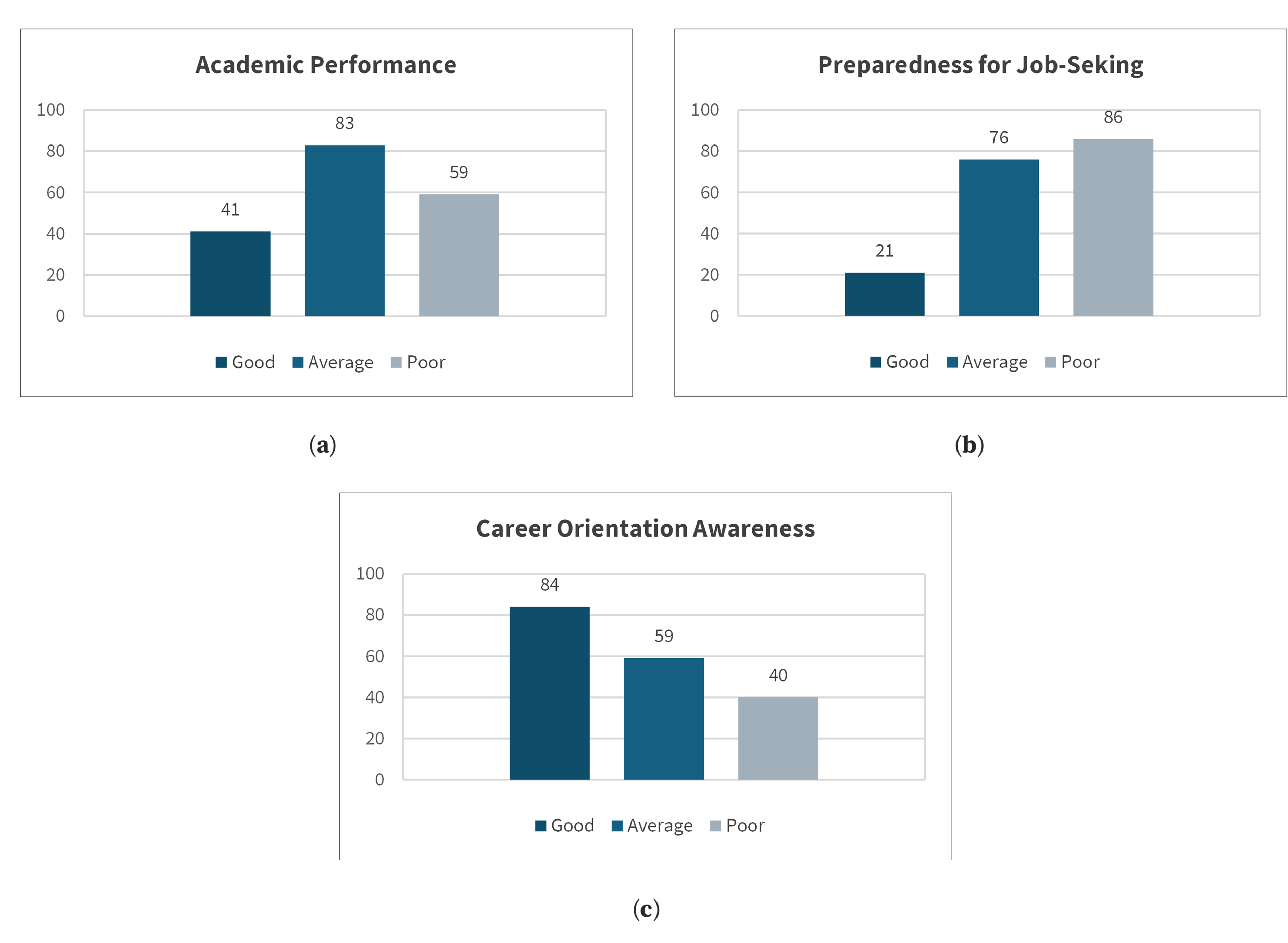
Figure 1. Categorical distribution of cumulative scores among study participants. (a). Academic performance (maximum score = 8; poor < 4, average = 4–6, good > 6); (b). Preparedness for job-seeking (maximum score = 10; poor < 5, average = 5–7, good > 7); (c). Career orientation awareness (maximum score = 8; poor < 4, average = 4–6, good > 6).
In terms of academic performance, 45.40% of the students were classified as average, 32.20% as poor, and 22.40% as good. Preparedness for job seeking was poor for 46.90% of the students, average for 41.50%, and good for 11.50%. In terms of career orientation awareness, 45.90% of the students were in the good category, 32.24% were on average, and 21.86% were poor.
3.4. Associations of sociodemographic variables with academic performance, preparedness, and career orientation
Table 3 presents the results of the bivariate analysis between the sociodemographic characteristics and the three outcome variables. Gender was significantly associated with preparedness for job seeking (p = 0.030), with male students reporting greater preparedness. Years of study also showed a significant association with preparedness (p = 0.047), where fifth-year students reported higher preparedness levels than fourth-year students did. No significant associations were observed for academic performance or career orientation awareness across any of the sociodemographic variables. Weak positive correlations were noted between preparedness and both family income (r = 0.057) and the number of siblings with a university education (r = 0.141).
| Variables | Academic Performance | Preparedness for Job-Seeking |
Career Orientation Awareness |
|
| Gender | 0.445 | 0.030 | 0.819 | |
| Residential status | 0.352 | 0.171 | 0.505 | |
| Family income | 0.506 | 0.487 (r = 0.057) | 0.262 (r = -0.092) | |
| Marital status | 0.813 | 0.141 | 0.185 | |
| Number of siblings with university education | 0.450 | 0.059 (r = 0.141, weak) | 0.833 (r = 0.016) | |
| Year of study | 0.456 | 0.047 | 0.989 | |
| Presence of pharmacist in family | 0.928 | 0.695 | 0.699 | |
| * Statistical associations were examined via independent samples t tests for binary categorical variables and Pearson’s correlation for ordinal/continuous predictors. ** p < 0.05 was considered statistically significant. Pearson’s r indicates the strength and direction of correlation (positive or negative). | ||||
3.5. Interrelationships among academic performance, preparedness, and career orientation
Figure 2 displays the Pearson correlation coefficients between academic performance, preparedness for job seeking, and career orientation awareness. A moderate positive correlation was observed between academic performance and preparedness (r = 0.38), whereas preparedness and career orientation awareness were weakly positively correlated (r = 0.09). No meaningful correlation was found between academic performance and career orientation awareness (r = –0.02).
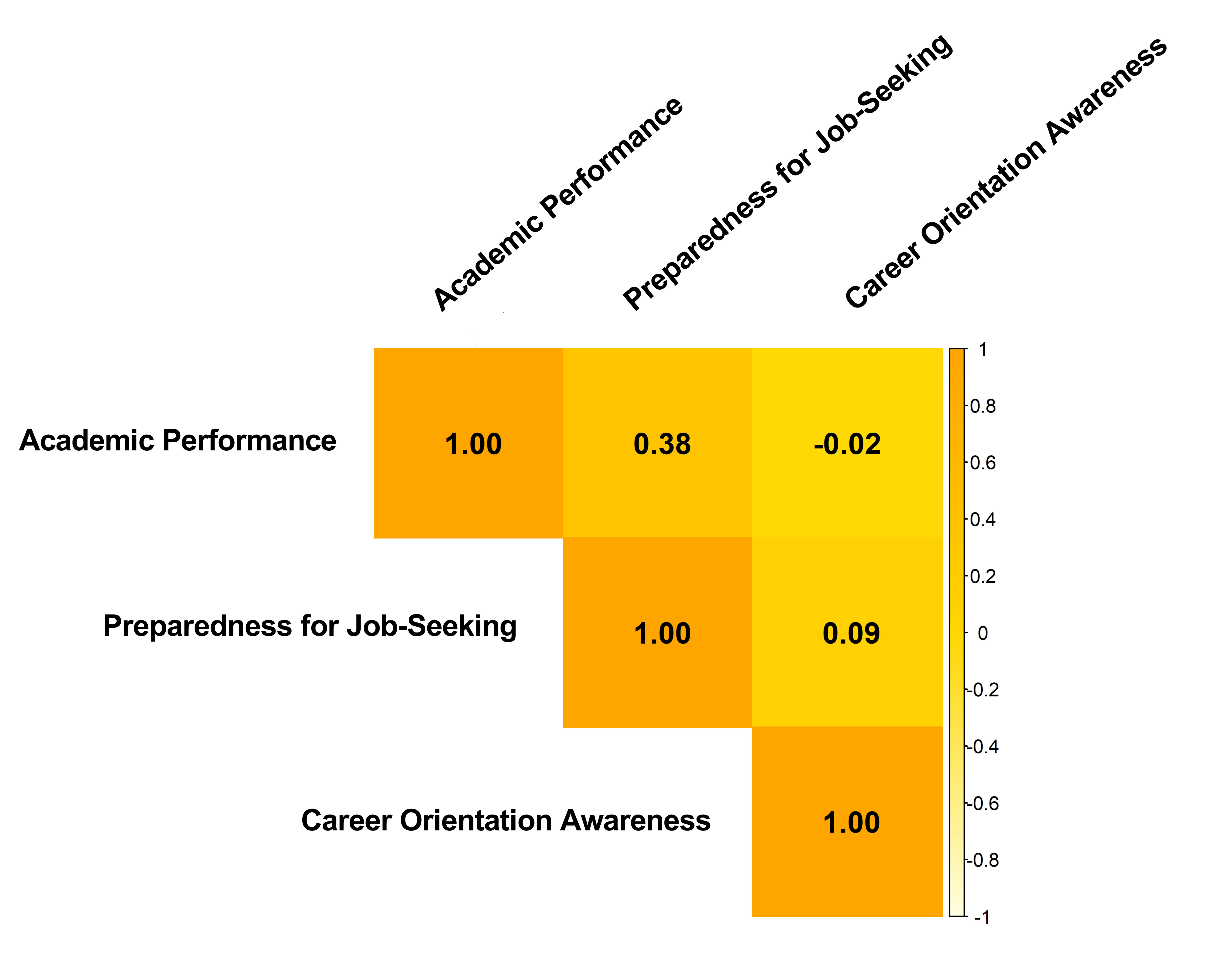
Figure 2. Correlation matrix between academic performance, job-seeking preparedness, and career orientation awareness among Pharm.D. students. The color intensity shows the strength of the correlation, with darker shades indicating stronger relationships. The Pearson correlation coefficient (r) indicates the direction of the relationship (positive or negative), with a value of r closer to ±1 signifying a strong linear relationship, whereas values near 0 indicate weak or no linear association.
4. Discussion
The study highlighted that the majority of respondents were female, from urban areas, and single, with many having at least one sibling to be a university graduate. Most students had strong academic performance records but limited exposure to research activities in the pharmaceutical sciences. While a significant proportion of the respondents engaged in professional development opportunities, many of the respondents lacked adequate career guidance and institutional support. Most of the respondents felt confident in basic job-seeking skills, including creating a CV and applying for different positions, yet more than half of the respondents did not feel prepared for job interviews. They had a better level of awareness of pharmaceutical roles, but their knowledge of related or nonpharmaceutical careers was limited. A moderate positive correlation was observed between academic performance and overall job-seeking preparedness; however, academic performance was not significantly associated with sector-specific career orientation. Notably, male respondents and those in the final professional year presented greater self-reported job-seeking skills than female respondents and fourth professional year students did.
The finding that students lack research experience is supported by Ethiopian studies, which highlight the weak capacity of undergraduate pharmacy students for research and that the number of research projects has also declined with time [22]. Similarly, another Ethiopian study highlighted the overall quality of research by pharmacy students to be average and often confined to a narrow focus with limited study designs [23]. A study performed at Qatar University revealed better significance of research and confidence in conducting research among students; however, most participants lacked data analysis skills [24]. Insufficient research facilities in laboratories, financial aid, experienced mentors, and motivation for research play vital roles in the limited understanding of research among undergraduate pharmacy students [25]. Furthermore, process complexity, limited social interactions, poor communication, depression among students and old curricula also influence undergraduate students’ research activities [26].
An Indonesian study supported the findings of the current study and highlighted that many pharmacy students struggled to understand their career orientation and highlighted a lack of effective institutional career guidance to the students [27]. In contrast, an Arabian study highlighted that the institution provided career guidance services but that only a limited number of students reached out to a career counsellor [28]. Another study highlighted the better satisfaction of students with the career development services offered at their institution but recommended networking with alumni, exposure to different pharmacy careers and a potential focus on the job searching process [29]. However, not all student populations are equally uninformed. For example, one study reported that pharmacy students in another setting had a relatively good understanding of career options in the pharmaceutical and healthcare sectors, suggesting that access to information and guidance may differ by institution or region [30]. Overall, career decision-making is multifaceted: opportunities for growth, self-esteem and self-efficacy, family and peer influence, psychological factors, the presence of a family business, and gender have all been identified as important determinants of pharmacy students’ career choices [31,32,33,34,35].
With respect to job readiness, the results of the current study are supported by a Saudi study highlighting better job readiness among pharmacy students and fresh graduates, with many focusing on professional roles in pharmaceutical marketing [36]. However, a study on pharmacy interns reported that workplace supervisors reported deficiencies in the communication skills and level of confidence of the interns [37]. Similarly, an Australian study highlighted that an excessive academic workload and a limited understanding of the healthcare system can limit the work readiness of new healthcare graduates [38]. Moreover, personal characteristics such as social intelligence, practical competence, and organizational acumen have been associated with contributing significantly to the job readiness of a fresh graduate [39,40].
In terms of career orientation, our results are in line with those of previous studies that highlighted that Pharm.D. Students tend to focus on traditional professional pharmacy roles. A study revealed that a majority of final professional-year pharmacy students were interested in clinical pharmacy, pharmaceutical manufacturing and quality control [41]. Similarly, an Arabian study highlighted the preference of pharmacy students for careers in hospital and community pharmacy settings; similarly, another study highlighted considerable interest among pharmacy students in working in research institutes, pharmaceutical companies, or hospitals [42,43]. In Pakistan, a comparable trend is observed among undergraduate pharmacies and traditional roles in hospitals or community pharmacies, followed by academic positions and professional roles in the pharmaceutical industry [44]. This inclination toward the traditional position is predictable, as the pharmacy curriculum itself emphasizes core practice areas and thus naturally channels students toward those professional pathways [45]. Additionally, external factors, such as the desire to serve in the public sector, salary expectations, preferred working hours, the work environment and geographic location, expected career growth, and even demographic factors, including gender, can significantly influence the career preferences of pharmacy students [46,47].
The comprehensive scope and context specificity are among the major strengths of this study, with a potential focus on assessing academic performance, job preparedness, and sector-specific career awareness among pharmacy students. However, the sample was drawn from a single public-sector university, which may limit the generalizability of the findings of the current study to other institutions. The cross-sectional design depicts perceptions at one point in time and cannot establish causality or account for changes as students’ progress into their professional careers. The study also did not include qualitative methods to explore insight into the causal reasons or thought processes behind many of the observed trends. Furthermore, the study focused only on students in their fourth and final professional years for job preparedness and intentions to pursue specific careers in pharmaceuticals but did not pursue actual career outcomes after graduation, an area that future research could explore.
The study recommends incorporating qualitative research in the same area to better understand the personal motivations, concerns, and decision-making processes of pharmacy students for career choices. Universities offering graduate degree programs in pharmaceutical sciences should strengthen the career preparation of students by establishing career counseling services and proactively encouraging the participation of students. Faculties may be made part of career-focused seminars and workshops so that students can develop a better understanding of pharmaceutical careers and related competencies for career planning and securing positions successfully in organizations. Students should also be exposed to a wider array of pharmaceutical careers and pathways through alumni networking events, mentorship programs with professionals from multiple pharmaceutical sectors, and career fairs that also include nontraditional pharmaceutical roles and opportunities for graduates. The provision of research opportunities to undergraduate pharmacy students as well as internships in both clinical and industrial settings can further enhance their practical skills and confidence. By implementing such changes, pharmacy institutions and regulatory bodies can better prepare fresh pharmacy graduates not only to excel academically but also to successfully steer diverse pharmaceutical career opportunities.
5. Conclusions
Pharmacy undergraduate students demonstrated a moderate level of academic performance and a reasonable level of awareness of traditional pharmaceutical career pathways; however, notable gaps exist in their understanding of nontraditional roles and in overall job readiness. The findings highlight that academic performance does not translate into sector-specific career orientation or practical job-seeking expertise among pharmacy students. Specifically, limited research exposure, low interview preparedness, and insufficient career guidance underline critical gaps in current pharmacy degree programs from the point of view of the pharmaceutical career. This study highlights the urgent need to introduce career counseling programs, capacity-building workshops, and exposure to diverse career pathways to ensure that fresh pharmacy graduates are well trained to traverse into an evolving competitive job market.
Author contributions
Conceptualization, SN, JJ, WK and NA; methodology, SN, JJ, WK and NA; software, WK and NA; validation, NA; formal analysis, SN, JJ, and NA; investigation, SN, JJ, WK and NA; resources, JJ, and NA; data curation, SN, JJ, and NA; writing—original draft preparation, SN, JJ, and NA; writing—review and editing, WK and NA; visualization, NA; supervision, SN, JJ, and NA; project administration, NA. All authors have read and agreed to the published version of the manuscript.
Publication history
| Received | Revised | Accepted | Published |
| 11 August 2024 | 14 November 2024 | 29 November 2024 | 31 December 2024 |
Funding
This research received no specific grant from the public, commercial, or not-for-profit funding agencies.
Ethics statement
This study obtained ethics approval from the Ethical Review Committee of the University of Sargodha (No. SU/REC/1491).
Consent to participate
Not applicable.
Data availability
The data supporting this study's findings are available from the corresponding author, Nabeel Ahmed, upon reasonable request.
Acknowledgments
The authors acknowledge the support of Ms. Khushbu Khalid in developing the study’s scoring system and Dr. Hafiz Rashid Hussain for facilitating data collection at the College of Pharmacy, University of Sargodha.
Conflicts of interest
The authors declare no conflicts of interest.
Copyright
© 2024 The Author(s). This is an open access article distributed under the terms of the Creative Commons Attribution (CC BY) License. The use, distribution, or reproduction in other forums is permitted, provided the original author(s) and the copyright owner(s) are credited and that the original publication in this journal is cited, in accordance with accepted academic practice. No use, distribution or reproduction is permitted which does not comply with these terms.
Publisher's note
Logixs Journals remains neutral concerning jurisdictional claims in its published subject matter, including maps and institutional affiliations.